Fig 01 · TDS on Property Sales: What Your Clients Get Wrong (and How to Fix It)
Section 194-IA of the Income Tax Act requires the buyer of immovable property to deduct TDS at the time of making payment to the seller. It is one of the most straightforward TDS provisions on paper, yet it produces a disproportionate share of compliance errors in practice. Buyers are not tax professionals, transactions are often one-time events in a person's life, and property registrations involve multiple parties and payment schedules that complicate the computation.
When the compliance fails, both the buyer and the seller are affected. The buyer becomes an assessee-in-default and faces interest and penalty. The seller does not get credit for TDS in Form 26AS, which creates reconciliation problems at the time of filing. As the CA for either party, catching these errors early saves significant time and cost.
When Does TDS Apply on Property
Section 194-IA applies when the following conditions are met:
- The immovable property being transferred is land or a building (or part of a building), other than agricultural land.
- The consideration for the transfer is Rs. 50 lakh or more.
- The transferee (buyer) is making the payment to the transferor (seller) who is a resident Indian.
The TDS rate is 1% of the consideration paid or the stamp duty value, whichever is higher, effective from 1 April 2022 following the amendment in the Finance Act 2022. Before this amendment, TDS was computed only on the actual consideration.
The provision does not apply to:
- Agricultural land in non-urban areas (as defined in Section 2(14) of the Act)
- Transactions where the seller is a non-resident (which attracts Section 195 instead)
- Compulsory acquisition by government agencies
The deduction must be made at the time of credit to the account of the seller or at the time of payment, whichever is earlier.
The Threshold Mistake
The Rs. 50 lakh threshold is applied per transaction, meaning per property, not per seller. This distinction matters in joint ownership scenarios (addressed below) and in transactions involving multiple payments.
The most common threshold error is applying the Rs. 50 lakh limit to each individual payment instalment rather than to the total consideration. A buyer paying Rs. 20 lakh as a down payment and Rs. 35 lakh as the balance might incorrectly assume that since neither payment individually crosses Rs. 50 lakh, TDS does not apply. This is wrong. TDS applies from the first payment if the total consideration (Rs. 55 lakh in this example) exceeds Rs. 50 lakh.
Once it is established that the total consideration crosses Rs. 50 lakh, TDS at 1% must be deducted on each payment made to the seller, including the first instalment.
Form 26QB Step by Step
Form 26QB is the challan-cum-statement for TDS on property under Section 194-IA. Unlike most TDS, where the deductor files quarterly TDS returns with a separate challan, Form 26QB combines the return and payment into a single online form.
Here is the process:
Step 1: Go to the Income Tax e-filing portal at incometaxindia.gov.in and navigate to e-Pay Tax. Alternatively, access Form 26QB directly from the TIN-NSDL portal.
Step 2: Select Form 26QB (TDS on Property). You do not need a TAN to file this form. The buyer's PAN is used as the identifier.
Step 3: Enter the seller's PAN, the buyer's PAN, property details (address and type), total consideration, and the amount being paid in the current transaction. The portal computes TDS at 1%.
Step 4: Pay through net banking or debit card. After payment, the challan generates a CIN (Challan Identification Number).
Step 5: Within 15 days of filing Form 26QB, generate Form 16B from TRACES (TDS Reconciliation Analysis and Correction Enabling System). Form 16B is the TDS certificate issued to the seller. The seller needs this to claim TDS credit in their ITR.
Step 6: Issue Form 16B to the seller within 15 days of the Form 26QB due date.
One important point: a separate Form 26QB must be filed for each payment instalment if the consideration is paid in parts.
Deposit Timelines and Penalties
The due date for depositing TDS under Section 194-IA is 30 days from the end of the month in which TDS was deducted. So if TDS was deducted on 15 April, the deposit is due by 31 May.
Consequences of late deposit or non-deduction:
Interest: Under Section 201(1A), interest at 1% per month (or part of month) is charged for failure to deduct, and at 1.5% per month (or part of month) for failure to deposit after deduction. Interest runs from the date on which TDS was due to be deducted to the date of actual deduction/deposit.
Penalty: Under Section 271C, penalty equal to the amount of TDS not deducted or not deposited can be levied by the Joint Commissioner of Income Tax. This is in addition to interest.
Prosecution: Section 276B provides for rigorous imprisonment of three months to seven years and a fine for wilful failure to deposit TDS after deduction. This provision is rarely invoked for small transactions but applies in principle.
No benefit to seller: Even if the buyer pays interest and penalty, the seller does not receive TDS credit in 26AS until the buyer files Form 26QB. The seller may end up paying tax on the gross consideration without credit, and must seek recovery from the buyer.
Joint Buyer Scenarios
Where property is purchased by joint buyers, each buyer is required to deduct TDS on their respective share of the consideration. This means:
- If two buyers are each paying Rs. 40 lakh of a Rs. 80 lakh property, each files a separate Form 26QB for Rs. 40 lakh.
- However, the threshold of Rs. 50 lakh is applied to the total property consideration, not each buyer's share. So if the total consideration is Rs. 80 lakh, TDS applies even if each buyer's share is below Rs. 50 lakh.
- Each buyer must enter their own PAN and the seller's PAN in their respective Form 26QB filings.
Similarly, where there are joint sellers, the TDS credit is split between them in proportion to their ownership shares. The buyer must ensure the correct proportion is reflected in Form 26QB so that each seller receives the correct TDS credit in their individual 26AS.
Clients often miss the joint seller split. The result is that TDS credit appears entirely in one seller's 26AS while the other seller has no credit, complicating both their ITR filings.
Common Errors and How to Fix Them
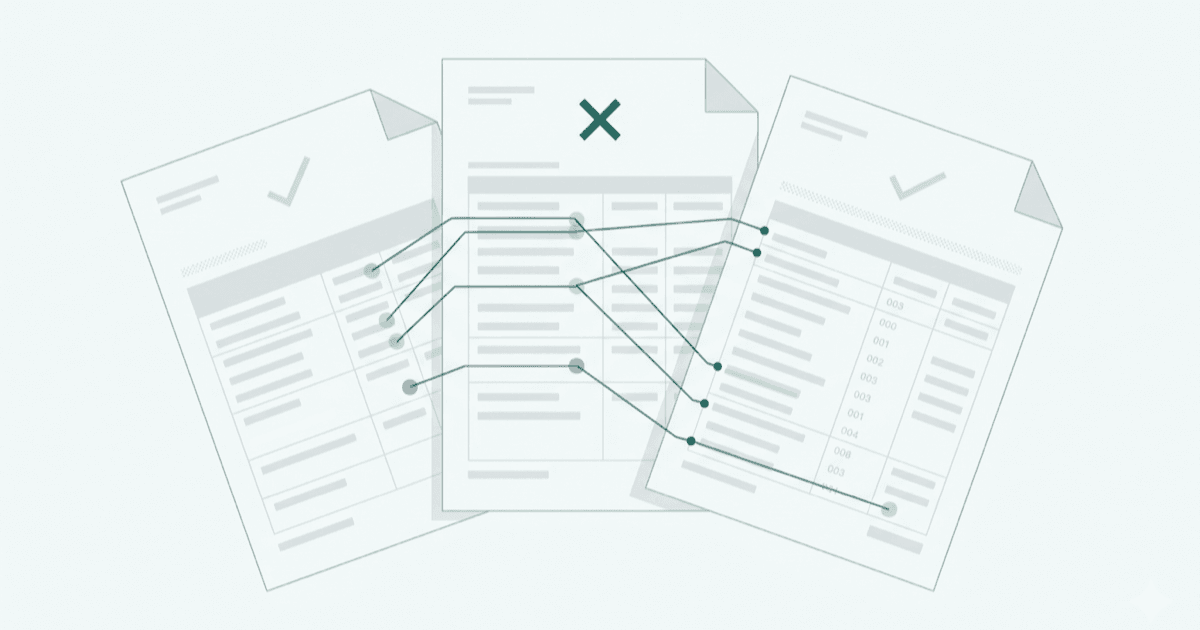
Wrong PAN for seller. The seller's PAN must be entered correctly in Form 26QB. An error results in TDS credit appearing in the wrong taxpayer's 26AS. Correction is possible via a Form 26QB correction request on TRACES, but it requires cooperation from both buyer and seller and can take time.
TDS computed on consideration only, not stamp duty value. Post April 2022, TDS must be on the higher of consideration or stamp duty value. If the property is undervalued for transaction purposes but the stamp duty value is higher, the buyer must use the stamp duty value for TDS computation.
Form 26QB filed but Form 16B not generated. The seller needs Form 16B to claim credit. If the buyer does not generate and share it within the required period, the seller faces reconciliation problems. Follow up with buyers proactively if you represent the seller.
Payment instalments without separate Form 26QB filings. Each instalment payment requires a separate Form 26QB. A single Form 26QB covering one instalment does not cover subsequent instalments automatically.
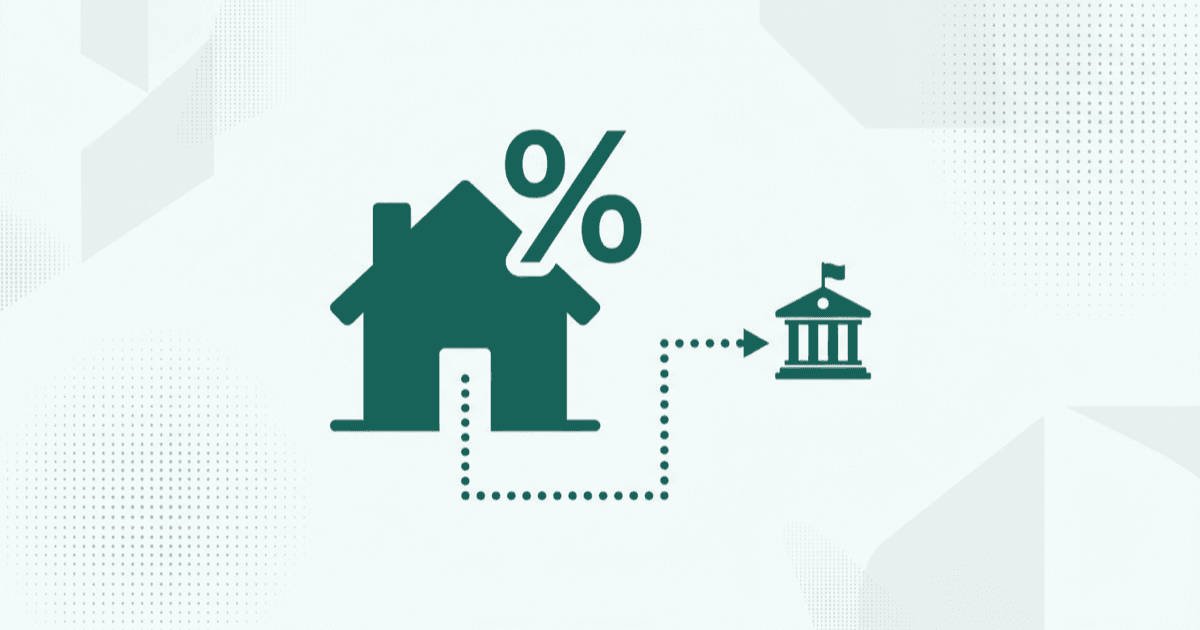
TDS on home loan disbursement scenarios. When a home loan is involved, the bank disburses funds directly to the seller. TDS is still the buyer's obligation. Some buyers assume the bank handles TDS; it does not. The buyer must deduct and deposit TDS even when the payment flows through a lending institution.
After resolving these issues, the seller will need to reconcile the corrected TDS credit with their Form 26AS before filing. The Form 16 vs 26AS vs AIS Reconciliation Checklist covers that step in detail. You can also track TDS compliance tasks for property transactions through the FiledRight rules engine.