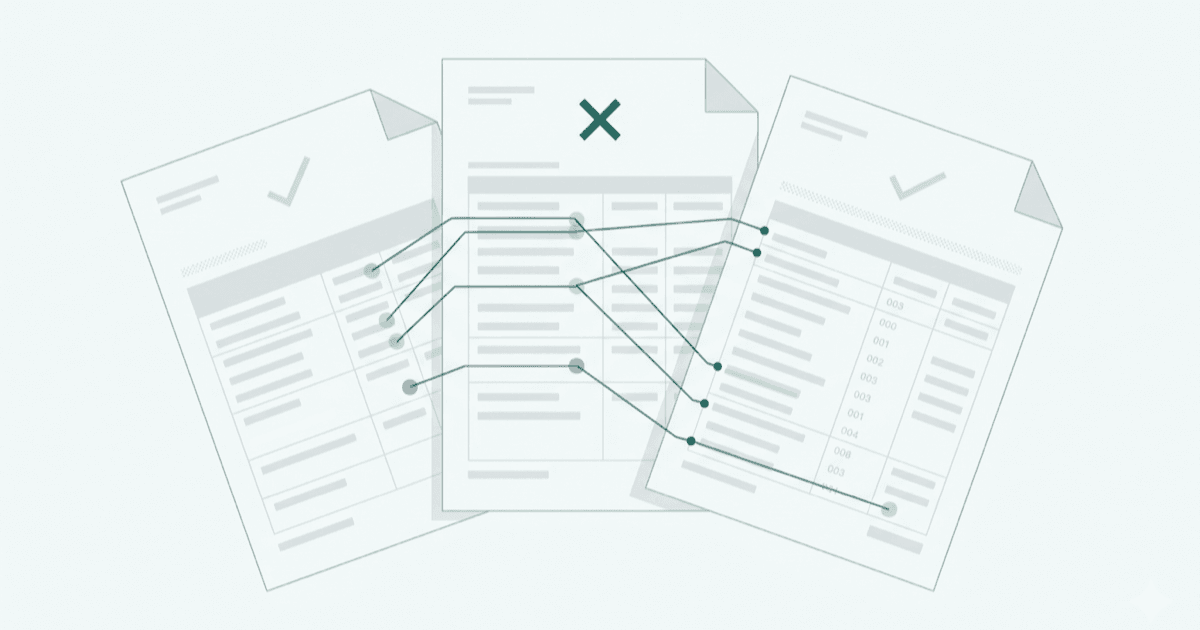
Fig 01 · CBDT's Updated ITR Forms for AY 2026-27: What's New and What Moved
The Central Board of Direct Taxes (CBDT) notified the updated ITR forms for Assessment Year 2026-27 on 31 March 2026, ahead of the new financial year, giving CAs more preparation time than in some prior years when form notifications arrived after the filing season had begun. The forms apply for returns filed for income earned in FY 2025-26.
The changes this year are partly structural, reflecting the transition to the new Income Tax Act, 2025, and partly operational, with expanded scope in certain forms and new disclosure fields. For a CA practice, the key questions are: which form applies to which client, and what new information will you need to collect?
Overview of Changes
The CBDT has notified all ITR forms from ITR-1 through ITR-7 for AY 2026-27. The overarching theme is simplification for common filer categories and expanded disclosure for high-value transactions.
The most significant structural point: where the old Income Tax Act referenced "Section 80C" or "Section 112A", the new Income Tax Act, 2025 has reorganised these provisions under new section numbers. The ITR forms for AY 2026-27 incorporate references to both the old and new section numbering during the transition year, with the old references appearing in brackets for clarity. For clients who ask why their CA is quoting different section numbers, this is the reason.
The new forms are available for download at the Income Tax e-filing portal and the changes have been published in the official CBDT notification in the Gazette.
ITR-1 and ITR-2 Changes
ITR-1 (Sahaj) has been significantly expanded in its scope for AY 2026-27. The headline change is that ITR-1 now allows reporting of income from up to two house properties. Previously, any taxpayer with more than one house property was required to file ITR-2, which is longer and more complex.
The expanded scope applies to residents with:
- Salary or pension income
- Income from up to two house properties (including a let-out property)
- Interest income
- Long-term capital gains under Section 112A of the new Income Tax Act, 2025 (corresponding to Section 112A of the old Act), up to Rs. 1.25 lakh, provided there are no carried-forward losses
The restrictions on ITR-1 remain: directors of companies, holders of unlisted equity shares, those with foreign assets or foreign income, and those with capital gains exceeding the Rs. 1.25 lakh threshold must file ITR-2 or the appropriate higher form.
Practical implication for CAs: a material segment of your salaried client base with a second house property (whether self-occupied or let-out) can now file ITR-1 instead of ITR-2. This simplifies the filing process for them. However, the choice must be verified: if the client has any disqualifying feature (a directorship, an unlisted equity holding, LTCG above the threshold), they must still file ITR-2.
ITR-2 for AY 2026-27 captures all income types excluding business or professional income. Notable new requirement: ITR-2 includes an expanded schedule for clubbed income. Where a spouse's or minor child's income is required to be clubbed with the taxpayer's income, the new schedule requires the nature of the clubbed income and the applicable provision to be stated. Previously, the aggregate clubbed income figure was sufficient. CAs with HUF clients and clients with working spouses should verify whether any clubbing disclosures need to be updated for this requirement. For a detailed treatment of clubbing in the HUF context, see The CA's Guide to HUF Taxation.
A new field has been added for rent that could not be realised. Where a landlord was unable to collect rent from a tenant and the unrealised amount is being claimed as a deduction under the House Property schedule, the amount must now be disclosed in a dedicated field rather than being embedded in the net annual value calculation.
ITR-3 and ITR-4 Changes
ITR-3 is for individuals and HUFs with income from business or profession where accounts are maintained under the regular method (not presumptive). For AY 2026-27, ITR-3 includes additional disclosures for taxpayers with high-value transactions in securities and derivatives. Active traders, who would previously disclose turnover and profit from derivatives under a single aggregate field, are now required to provide a segment-wise breakdown (equity cash, equity derivatives, commodity derivatives, currency derivatives). If you manage clients who are active derivative traders, collect the segment-wise trading statements, not just the consolidated P&L, from their broker.
ITR-4 (Sugam) for presumptive taxpayers now explicitly accommodates limited capital gains reporting. Taxpayers with LTCG under Section 112A of the new Act up to Rs. 1.25 lakh and no carried-forward losses can report this in ITR-4 along with their presumptive business income, without shifting to the more complex ITR-3. This mirrors the ITR-1 change for salaried individuals and reduces unnecessary form migration for small business owners who have modest equity fund redemptions.
For ITR-4 filers, the presumptive income disclosure now includes a field for the declared profit percentage. Under Section 44AD (the new Act's corresponding provision), the minimum declared profit is 8% of gross receipts (or 6% for digital receipts). The form asks for the declared percentage to flag declarations below the minimum threshold.
New Schedules and Disclosures
Buyback income schedule. Following Budget 2026's reclassification of buyback income as capital gains in the hands of shareholders, ITR-2 and ITR-3 include a new line item within the capital gains schedule specifically for buyback proceeds. This requires the name of the company, the face value of shares tendered, the cost of acquisition, and the period of holding. Clients who participated in buyback offers during FY 2025-26 will need this data from their broker or the company's buyback documents.
STT disclosure. For taxpayers claiming STT as a deduction under the business income schedule, ITR-3 now requires the STT amount to be separately disclosed per segment (futures and options). This aligns with the revised STT rates introduced in Budget 2026 and allows the department to cross-verify STT deduction claims against exchange-reported data.
High-value transaction reconciliation. ITR-2 and ITR-3 carry forward from last year the requirement to disclose high-value financial transactions that appear in the Annual Information Statement (AIS) but for which no income has been returned. Clients with large transaction volumes in their AIS (property registrations, mutual fund redemptions, bank credits above threshold) who do not have a corresponding return entry will trigger an automated mismatch query. Collecting AIS printouts from clients before preparing returns, rather than after, saves multiple revision cycles.
Impact on Document Collection
The expanded ITR-1 scope means your standard document checklist for salaried clients needs a new question: "Do you have more than two house properties?" Previously, any second property automatically required an ITR-2 instruction; now, two properties can be accommodated in ITR-1, but three or more still require ITR-2.
For business-income clients, segment-wise trading statements are now necessary rather than optional for those with derivatives activity. Add this to your standard document request for ITR-3 clients at the start of the season.
For clients who received buyback proceeds, request the following from them: the buyback offer document or acceptance form (which states the price per share and the number of shares accepted), the demat account statement showing the debit of shares, and the date of original purchase of those shares. The cost of acquisition and holding period are required for the new buyback capital gains schedule.
The unrealised rent field in ITR-2 requires confirmation from landlord clients about any tenants in default. Add this to your property income questionnaire.
Collecting AIS data early is now structurally more important than in previous years. The additional disclosure schedules are keyed off AIS data, and clients who hand over documents but not their AIS will require a second round of contact. See Form 16 vs 26AS vs AIS: A CA's Reconciliation Checklist for a systematic approach to this reconciliation.
Filing Timeline
The key deadlines for AY 2026-27 are:
| Category | Due Date |
|---|---|
| ITR-1 and ITR-2 (non-audit individuals) | 31 July 2026 |
| ITR-3 and ITR-4 (non-audit business income) | 31 August 2026 |
| Audit cases (ITR-3, ITR-4, ITR-5, ITR-6) | 31 October 2026 |
| Revised returns | 31 March 2027 (fee applies after 31 December 2026) |
| Updated returns (ITR-U) | Up to 4 years from the end of the assessment year |
The ITR-U extended window (4 years instead of the earlier 2 years, introduced by Finance Act 2025) means clients can file updated returns for AY 2023-24 up to 31 March 2027, and for AY 2024-25 up to 31 March 2028. This extended window is useful for clients who missed disclosing a capital gain or rental income in a prior year and want to regularise without waiting for a notice. The additional tax on an ITR-U filed after 24 months is 50%, and after 36 months it is 60%, rising to 70% in the fourth year. Advise clients on the cost-benefit before recommending an ITR-U over waiting.
The FiledRight rules engine flags form selection based on client profile, helping you route each client to the correct ITR form and identify the additional documents needed for the new schedules.